


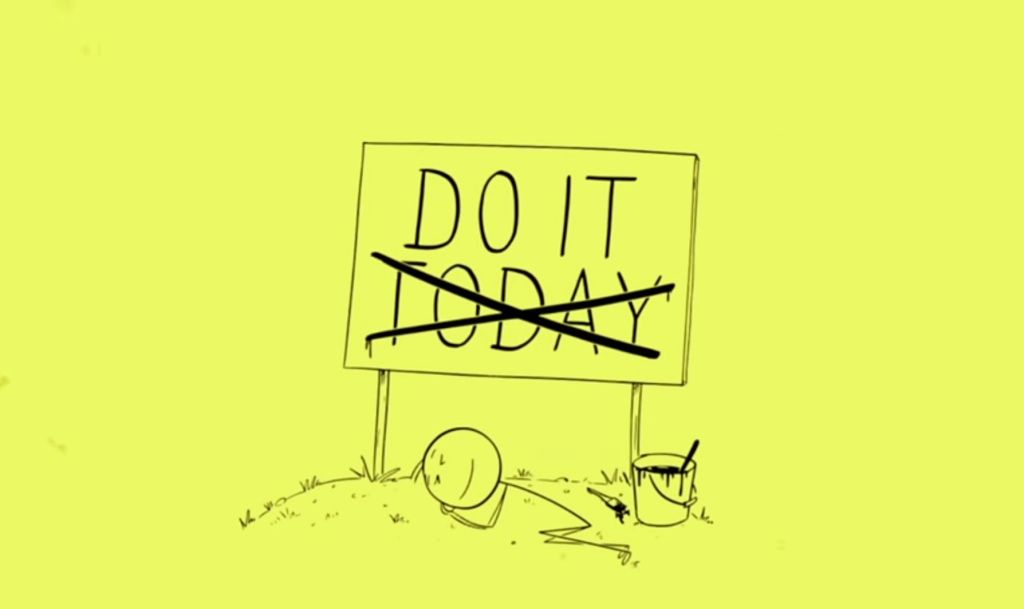
Let’s ditch the lie we’ve all been sold.
Most of us think discipline is about brute willpower. Waking up at 5 AM even if you’re exhausted. Grinding through misery, forcing yourself to do things you hate. We’ve been conditioned to believe that to achieve anything worthwhile, you must wage a daily war against your own desires.
But what if I told you that real discipline actually feels easy?
I used to be stuck in that frustrating cycle. My goals would start with fiery enthusiasm, only to fizzle out within weeks. Fitness routines, productivity hacks, learning new skills – they’d inevitably crumble, leaving me feeling like a failure.
You probably know this cycle:
- The meditation practice that lasted 3 days.
- The diet abandoned by Thursday.
- The journal with four entries before collecting dust.
- The language app with a 12-day streak from six months ago.
I blamed myself thinking I lacked some internal strength. I’d promise to “try harder next time.”
What I didn’t understand then was that my entire approach to discipline was fundamentally flawed. I was trying to force change through sheer willpower.
The Game-Changing Discovery: Stop Fighting Your Nature
Everything changed when I made a crucial discovery: Discipline isn’t about having incredible willpower. It’s about creating environments where good decisions become the path of least resistance.
For years, I approached discipline like it was a character trait I simply lacked. I’d download apps, buy planners, set ambitious goals, believing this time would be different. Yet, I’d always struggle against the same old patterns, blaming myself for being lazy or unmotivated.
What I didn’t grasp was a fundamental principle of behavioral psychology: Our environments shape our actions far more powerfully than our intentions.
Research shows that willpower isn’t an unlimited resource; it’s more like a battery that depletes with use. The startling truth? People who appear highly disciplined often aren’t exercising more willpower than anyone else. They’ve simply structured their environments so that good decisions require less effort than bad ones.
This is called making good behaviors easier and bad behaviors harder. It sounds almost too simple, but the evidence overwhelmingly supports this approach.
From Struggling to Designing: My Mindset Shift
The breakthrough came when I stopped seeing myself as someone who lacked discipline and began identifying as someone who designs environments for success. This wasn’t just semantics; it fundamentally changed how I approached every habit I wanted to build.
Instead of relying on fleeting motivation, I started making tiny environmental adjustments that transformed my daily choices. When your environment works with you instead of against you, discipline becomes almost effortless.
Where does discipline feel toughest for you? Is it staying consistent with fitness, staying focused, eating well, or something else entirely? Drop it in the comments below. Your insights help me create content that truly supports you!
The Real Enemy of Discipline: Waiting for Motivation
My friend, the real enemy of discipline isn’t laziness. It’s the belief that you need to feel motivated before taking action.
“I’ll start when I feel ready.”
“I need to get motivated first.”
“I just don’t feel like doing it today.”
“Successful people probably wake up excited to work.”
“If I were truly passionate about this, it wouldn’t feel so hard.”
These thoughts would paralyze me. I’d wait for motivation to strike, believing that was the missing ingredient. And when it didn’t come, I’d take it as evidence that perhaps I wasn’t pursuing the right goals.
But here’s the game-changer from neuroscience: Motivation doesn’t lead to action. Action creates motivation.
Our emotional brain, which drives motivation, is activated by doing, not by waiting. What we interpret as a lack of motivation is often just our brain’s natural resistance to energy expenditure. Our brains are wired for conservation, not constant achievement.
The solution isn’t found in discovering the secret to constant motivation. It’s found in moment-by-moment choices to take small actions regardless of how you feel.
I started practicing a simple technique: Whenever I noticed myself waiting for motivation, I’d say, “I don’t need to feel like it to do it.” Then, I’d take one tiny step – just putting on my running shoes, or opening the document I needed to work on like this blog post you’re reading now.
Every time you act without requiring motivation first, you build the neural pathways that make discipline your default state, rather than your struggle.
The Magic of Automaticity: Discipline Becomes Easy
When you stop relying on willpower and start building systems, something remarkable happens: Discipline becomes automatic rather than forced.
It wasn’t an instant click. It was a gradual realization that my daily actions were becoming more consistent, more aligned with my goals, and strangely enough, requiring less mental effort.
- A workout that once required an internal pep talk became just what I did at 6:00 AM.
- A distraction-free writing session wasn’t a victory of concentration, but simply what happened when my phone was in another room and my browser extensions blocked social media.
This is what psychologists call automaticity – that state where behaviors require minimal conscious effort. Studies show that once a behavior becomes automatic, it activates the basal ganglia part of the brain (our habit center) rather than the prefrontal cortex (our decision-making center). This means it requires significantly less mental energy.
In fact, research finds that about 43% of what we do every day is performed out of habit, not conscious decision. People with the most self-control aren’t necessarily exerting more willpower; they’re triggering automatic routines that move them toward their goals.
The foundation of this transformation? Habit stacking – attaching new behaviors to existing ones. You anchor new habits to established routines, creating a chain reaction of positive behaviors. The psychological burden disappears. You’re no longer fighting yourself; your systems are simply carrying you forward.
The Ultimate Test: Discipline When Life Hits Hard
True discipline isn’t proven when everything is going well. It’s proven when every emotional signal tells you to quit.
I was halfway through a critical project when life threw a curveball. A family emergency, disrupted routines, sleep deprivation… every cell in my body screamed to abandon my commitments. In the past, this would have been my perfect excuse.
But something different happened. The systems I had built carried me through. Not perfectly – my output certainly decreased – but they kept me moving forward when pure willpower would have failed completely.
- My established morning routine didn’t require a decision; my body simply moved through the motions.
- My distraction-free environment didn’t suddenly let Netflix in because I was tired.
- My commitment to an accountability partner didn’t dissolve because I didn’t feel motivated.
By the time the crisis passed, I hadn’t lost momentum. I hadn’t fallen into that soul-crushing cycle of quitting and restarting. I realized I had become someone who simply didn’t consider abandonment as an option.
This is the ultimate test: Can you continue when motivation is completely absent? Can you trust your systems when your feelings are screaming for immediate comfort? Can you maintain consistency when life throws its inevitable curveballs?
The freedom comes when you realize that discipline isn’t about perfect performance. It’s about reliable systems that account for your humanity – your limits, your fluctuating energy, your need for rest. When your systems include plans for failure and recovery, you create resilient discipline, the kind that bends but doesn’t break under pressure. That’s when discipline transforms from a daily struggle into a sustaining force.
Your Journey Starts Now: Design for Discipline
The secret to achieving discipline, the easy way, isn’t found in motivational quotes or forcing yourself to try harder. It’s found in a fundamental shift:
- From willpower to system design.
- From fighting your nature to aligning with it.
This transformation doesn’t happen overnight. I still have moments when I slip. But those moments are less frequent and less damaging. Today, I move through my priorities with a sense of ease I once thought impossible. Not because I’ve mastered pushing through resistance, but because I’ve designed my life so the right things are often the easiest things to do.
I no longer pride myself on pushing through. I focus on eliminating resistance before it arises. I don’t rely on split-second decisions; I make them in advance through carefully crafted systems. And paradoxically, this has made me more productive than all my previous attempts at “hardcore discipline” combined.
This doesn’t mean I never face challenges. It simply means my baseline of consistent action happens automatically, saving my limited willpower for truly novel situations that require conscious choice.
This transformation is available to anyone willing to make the same fundamental shift: from trying to become disciplined to designing for discipline.
One year from now, you’ll thank yourself.
Have you ever experienced a moment when discipline seemed to click for you? Share your story in the comments below about a time when you found yourself naturally doing something that used to require tremendous willpower. Your experience might be exactly what someone else needs to hear right now.
You’re closer than you think. The disciplined person you want to be already exists within you. They’re just waiting for you to stop fighting yourself and start designing for success.
- My Dream Home
- 7 Minimalist Rules That Changed My Life
- I wouldn’t say crazy but yeah it’s low effort.
- –
- How to easily transform your life in 6 months?
If you wanna buy me a coffee http://coff.ee/thecaffeatedscribbler
 krpoems23