


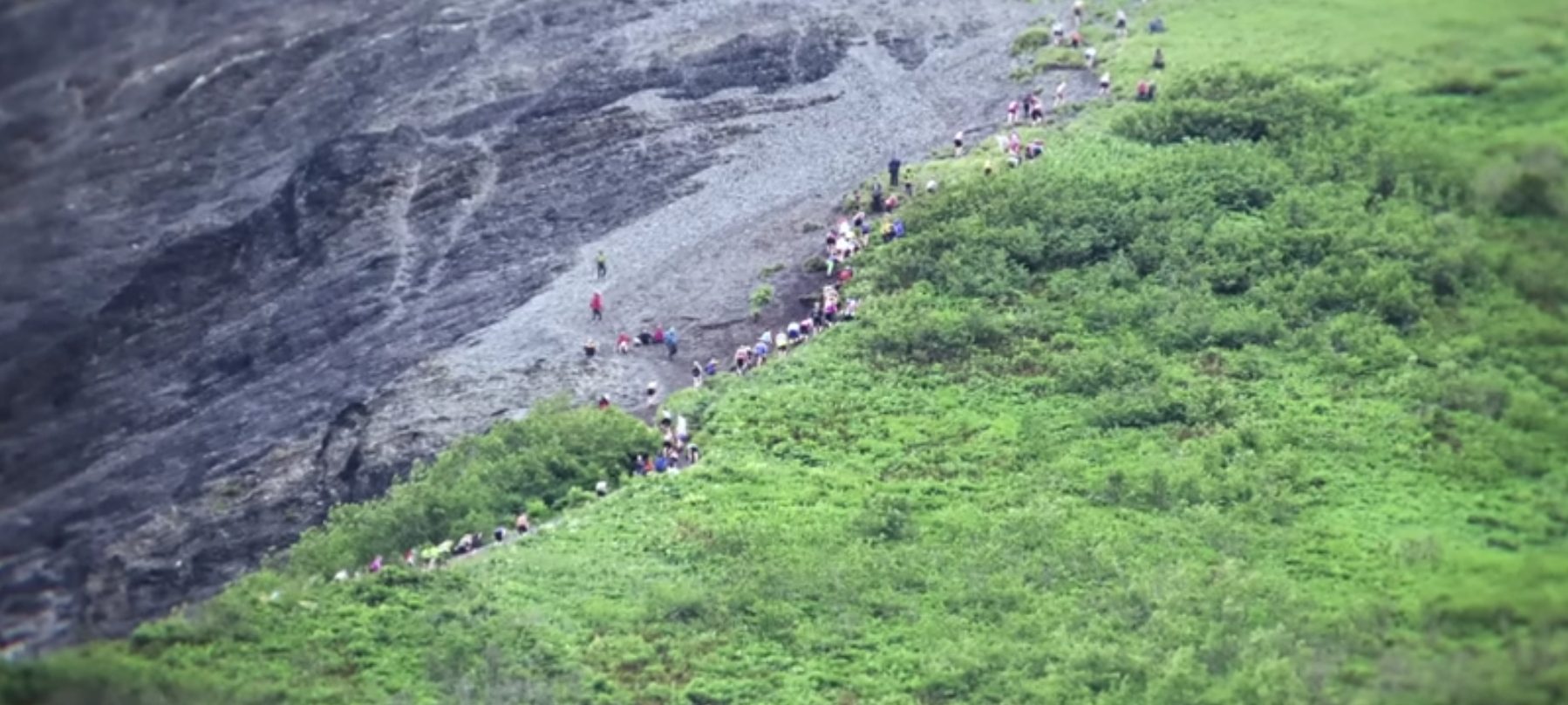
Captain Penny Assman was a guard commander in the medevac helicopter unit of the National Guard. She liked to challenge, and one of the biggest challenges she knew of was the Mountain Marathon Race in Seward near Anchorage, Alaska.The race is only about 3 miles long, but the first mile and a half or so is spent ascending the 3,000-foot peak of the mountain. The rest is treacherous scrambling back down the steep cliffs you just came up. It’s one of the toughest races in the world, and it’s open to anyone.
According to legend, the race began when two miners argued about whether getting up and down the mountain in less than an hour was possible. The two decided that the only way to settle the bet was to run the route with the loser promising to pay for drinks with anyone who came to watch.Then, to make that round of drinks as big as possible, they decided to run on the 4th of July, drawing a large independent state crowd.
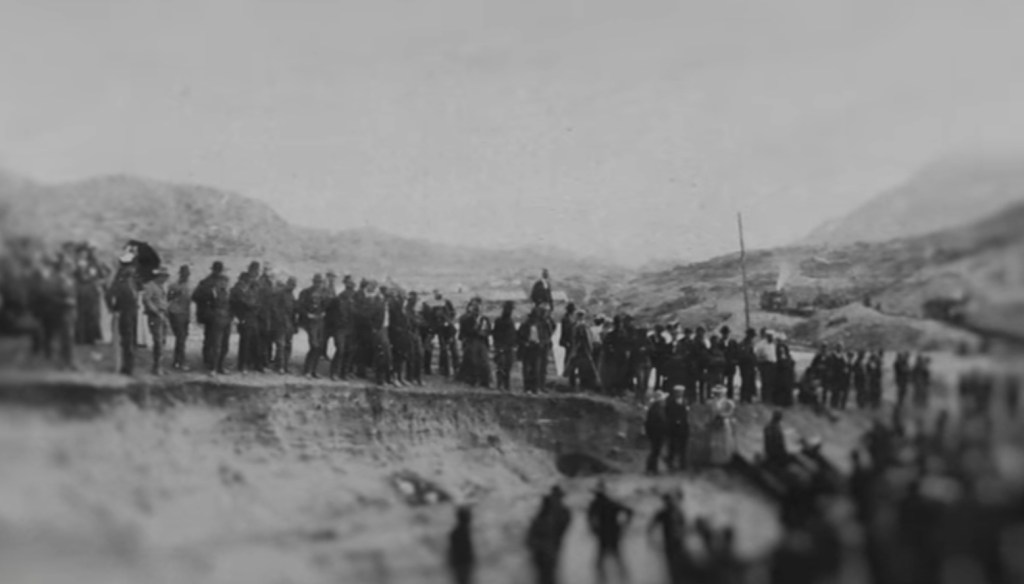
The miner who believed it to be possible would miss the one-hour target by two minutes and ultimately lost the bet, but he turned out to be correct anyway. Since the race’s official start in 1915, quite a few people have managed it in less than an hour, and today, the course record is 41 minutes and 26 seconds.
In 2012, Penny thought she could get into the top third of competitors and took the run seriously.Before the race, she walked the route ensuring she knew where all the dangerous spots were, when to be careful, and when to go for it. This was important, although the path was worn, the route isn’t marked, and a wrong turn can be dangerous, even deadly. On the day of the race, the weather wasn’t great, and a constant drizzle of rain made the rocky terrain slippery, and parts of the mountain were covered in fog. Even so, Penny made good time up the hill, and started the long scramble down until she reached a steep rock face.
This was one of the most challenging parts of the course, and crowds would gather at the bottom to watch the runners carefully make their way down. There were also two routes down from there. Penny was sure that the left side as you come down was more manageable, but then almost as soon as she started to make her way down, she lost her footing and began to slip down the cliff face. She managed to steady herself for a moment by leaning back on the rock and trying to push herself back up with her hands, but every time she tried, she slid a little more, slipping from one rock formation to another. Eventually, she saw tree roots sticking out the side of the cliff and thought she could jump toward them to stop her fall. So she launched herself at them, reaching out to grab them, but unfortunately, didn’t even graze them with her fingertips. Then she fell 15 feet toward the ground back first. A woman at the bottom ran toward the cliff and tried to break Penny’s fall, and she did slightly, but Penny still smashed into the ground, hitting her head and torso.
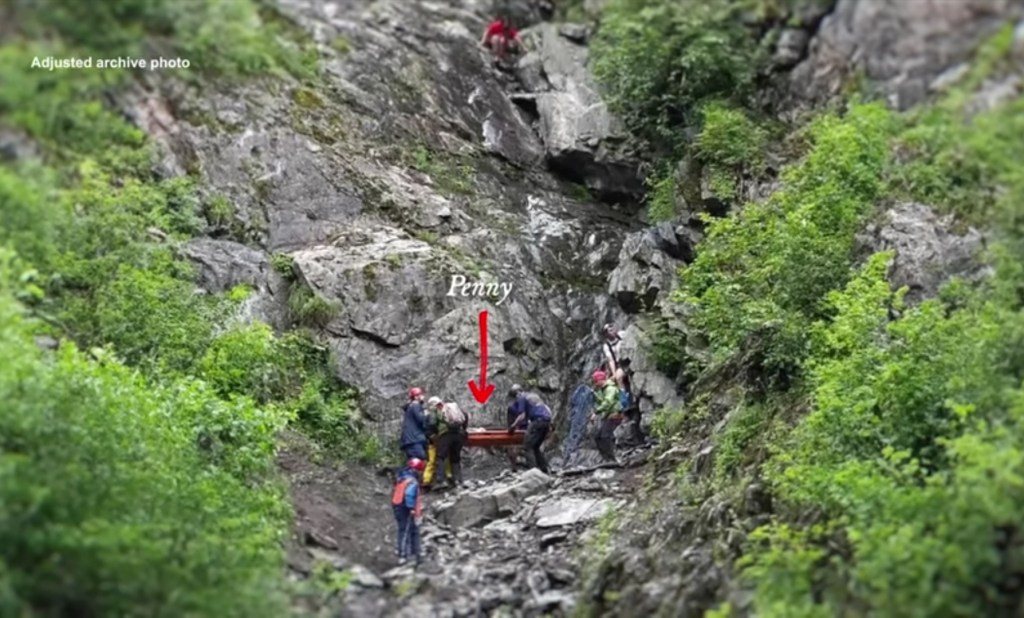
Luckily, she was still conscious, so the woman held onto her and stabilized her while they waited for a medevac to fly her out. Penny would then go on to spend 6 weeks in the hospital with lacerations and broken ribs. And the spot where she fell, turned out to be dangerous. Later, another runner named Matthew Kenney fell so hard he broke his arm and his skull, knocking him unconscious for days. Penny and Matthew also weren’t the first or the last people to be badly injured in the race. There are reports of people breaking limbs, lacerating their organs after getting impaled on trees and even narrowly escaping from bears. But all of them fully recovered, and some even went on to compete again. The one man who didn’t, or at least we don’t think he did, was Michael LeMaitre. Unlike Penny, Michael wasn’t anywhere close to contention for a winner spot in 2012. When he was younger, he was a keen runner, nearly going to Syracuse University on a track running scholarship. By then though, he was a 66-year-old businessman, and despite still being fit, he wasn’t the fastest of runners.But he was the sort of man who liked to challenge and doing things that seemed different, even crazy to his family, especially if it looked like fun. And even though he’d been told to at least walk the route before the day of the event, he never did, and so the day of the race was his first time going up the mountain. Either way, he set off filled with confidence at 3 pm, but by 5 pm, long after the fastest runners had finished, he still hadn’t even reached the halfway point of the summit, and he was struggling.
The last time anyone saw him, he was 200 feet from the top of the mountain. Then, just before 6 pm, one of the race volunteers had spotted a straggler who wanted to know if he would still be able to finish, even though he was so slow. The volunteer told him that everyone is allowed to run at their own speed and asked for his bib number, and then radioed the volunteers below to say the last runner was about to reach the turnaround point, and he should be with them in an hour and a half or so. Meanwhile, Michael’s wife, Peggy, waited at the finish line for her husband.
She knew he wouldn’t be quick, but she’d still be proud of him for completing the race. First, the top competitors crossed the finish line, then the slower runners came in, sometimes in groups, sometimes one at a time. Then after a while, she was waiting for so long that the organizers were starting to close the race down and pack up the finish line. But she still wasn’t worried. Even though the event seemed to be over, some people were still turning up. Peggy assumed the organizers knew who was still out there and they wouldn’t leave completely until Michael was back. But Michael never crossed the finish line. The hour and a half estimate given by the volunteer passed, and then the day turned to night. Peggy then started to ask around to see if anyone had seen Michael. She was also soaked and cold, so she got in her car and began to honk her horn and shout Michael’s name, hoping the noise would guide him down. Tragically, it didn’t; Michael had vanished. After he was officially reported missing, the Alaska State Troopers and the fire and rescue department began an extensive search of the mountain. Michael’s daughters also helped in the search, and one of them even arranged for a specialist cadaver dog to be flown all the way from Oregon to follow the path of the race. But the dog didn’t find a single trace of her dad anywhere. One of Michael’s friends also paid for a helicopter to fly over the mountain and take both high resolution and thermal imaging photos. But again, despite hours of thorough combing the mountainside, there was just nothing. By the end of July, the official search was abandoned but that didn’t stop people who lived in Seward from carrying on. One report claims that on the weekend after the official search was called off, dozens of people, possibly hundreds, went up the mountain to search for the missing man. The searchers also hoped that when fall came and the dense foliage thinned out, Michael’s body might be easier to spot. But they just never found a trace. So the question is, what happened to Michael? One possibility is that he was mauled by a bear. People have reported seeing bears or even running from bears during the race before.
In 2017, there were back-to-back attacks by bears in the area, including an attack on a 16-year-old runner who got lost competing in another race not far from Anchorage. But because they never found Michael, there’s no way to know if the same thing happened to him. In all likelihood, he just got lost. Michael didn’t have the best eyesight. He suffered from advanced glaucoma that destroyed his peripheral vision and narrowed his eyesight so badly that he once called it a disability. Even for someone with 20/20 vision on a clear day,the Mount Marathon Race is a tough route to follow. There are even spots on the mountain that hikers have had to be rescued from in sunny weather. On a damp, foggy day like July 4th, 2012, his poor vision could have taken him down the wrong side of the mountain, where he could have just slipped and fallen into a ravine, never to be found. But even if he did get lost, as is often the case with disappearances like this, it’s still hard to fathom how someone can disappear so completely in such a short period of time.
In a race with hundreds of others on a relatively short, frequently traveled path, it seems impossible that there would be no trace of someone after such an intense search with thermal imaging and sand dogs. Either way, Michael’s disappearance would change the rules of the race. Now, if you can’t make it to the halfway point up the mountain in an hour, you’re forced to turn around and go back down again. Runners also have to sign a statement, saying they’ve run the course before, either in a previous year, or by going on one of the two training runs held in the run up to the event.
The race has also been rerouted, avoiding the dangerous cliffs where Penny and Matthew fell, but still, as of 2023, there was no sign of Michael.
 krpoems23